Supaveda
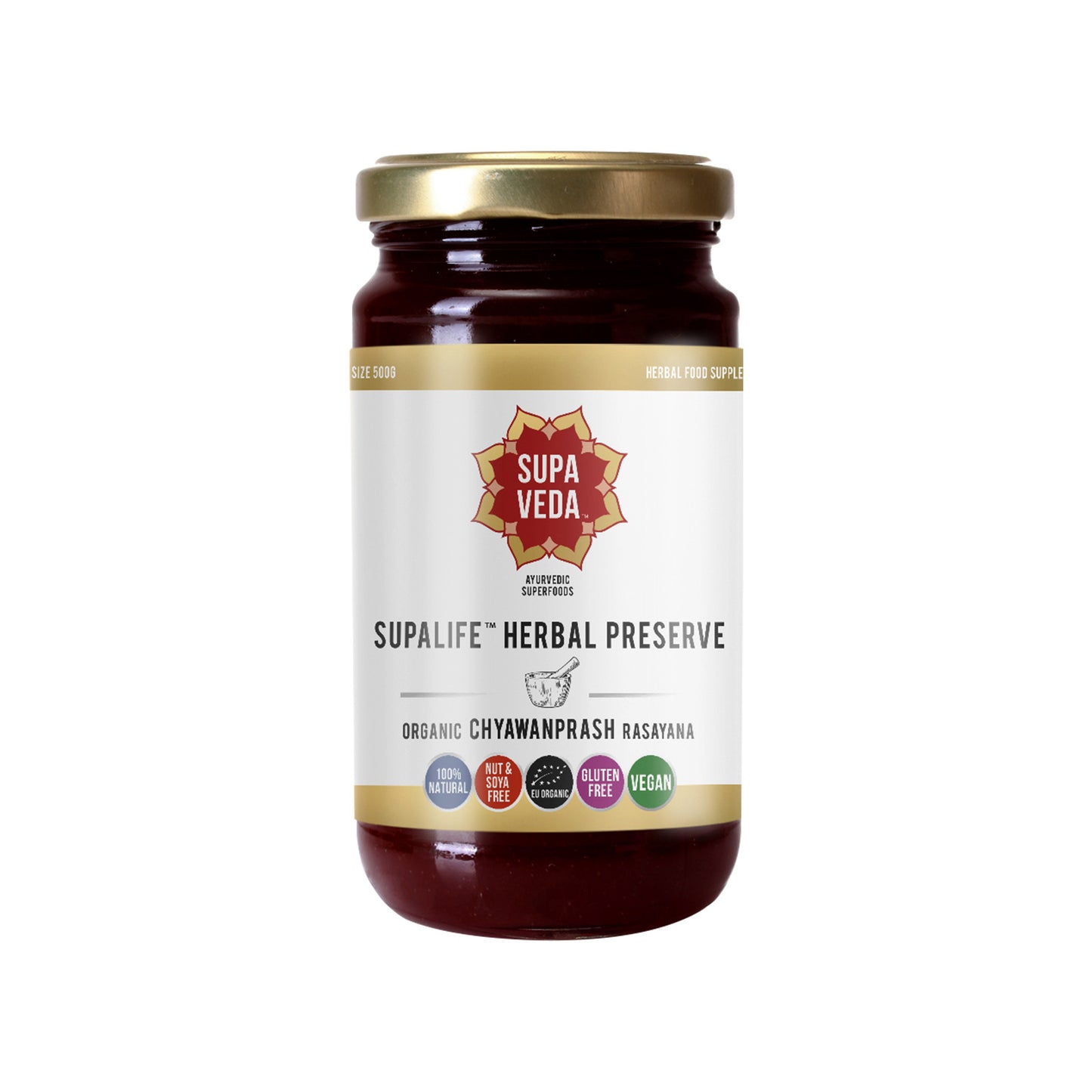
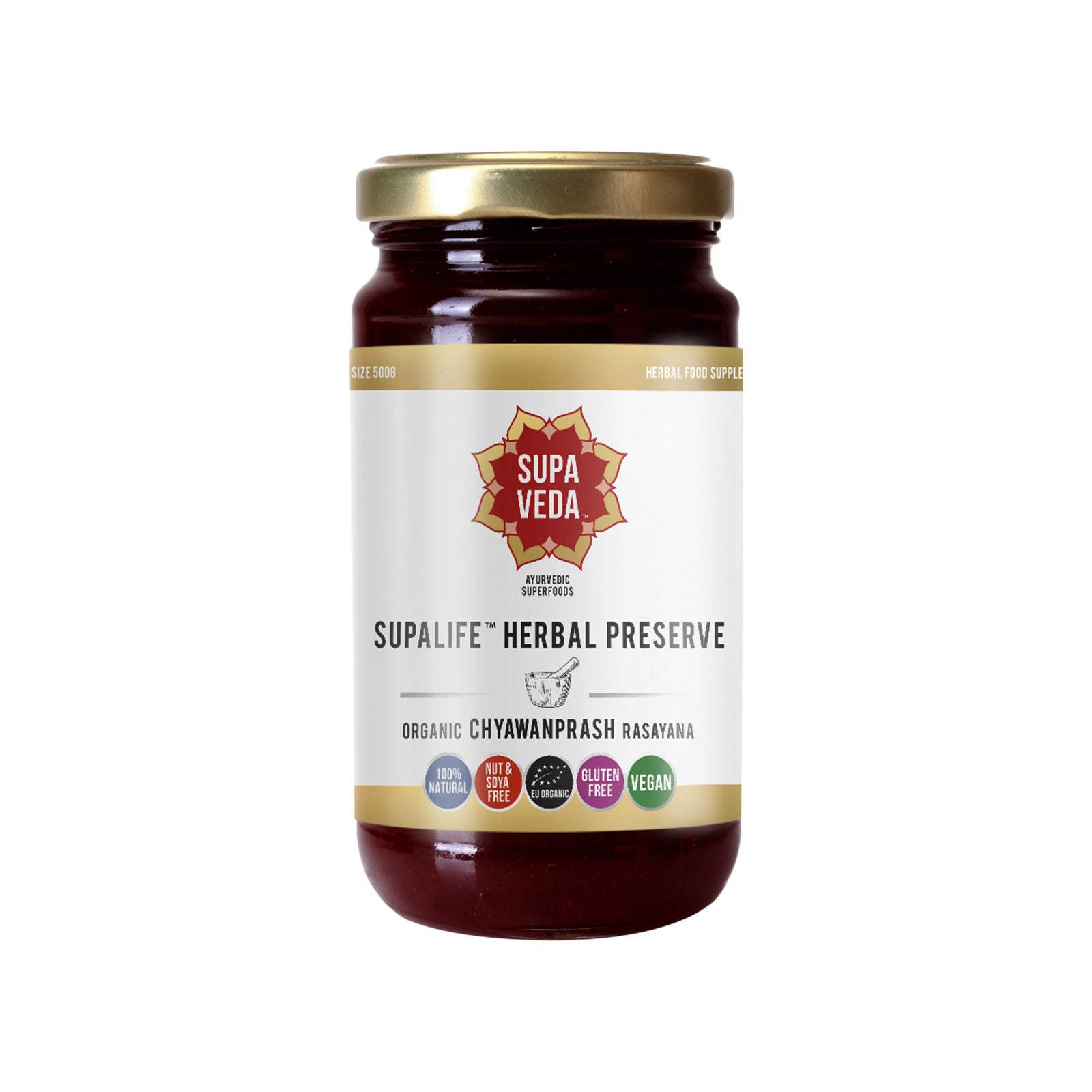
Supa Life Herbal Preserve 500g Vegan Chyawanprash
Supa Life Herbal Preserve 500g Vegan Chyawanprash
Couldn't load pickup availability
Three thousand years of tradition. Reimagined for everyone.
Chyawanprash is one of the oldest and most celebrated preparations in all of Ayurveda — a complex herbal preserve first described in the Charaka Samhita over 2,500 years ago, and used continuously ever since as a daily tonic for immunity, vitality and longevity. The classical formula binds its many herbs together with honey and ghee.
SupaLife Herbal Preserve preserves everything that makes this tradition extraordinary — and opens it to everyone. We have replaced honey with organic jaggery, an unrefined cane sugar used in Ayurvedic practice for centuries as an anupana (herbal carrier), and ghee has been replaced with coconut oil, a deeply classical Ayurvedic ingredient in its own right. The result is a preserve that is completely plant-based, without compromise to the formula's depth, complexity or purpose.
Rasayana — from the Sanskrit rasa (essence) and ayana (path) — translates as 'the path to essence'. In Ayurveda, rasayanas are the highest class of preparations: those that nourish the body at its deepest level, build ojas (vital energy), and are traditionally taken daily, for life.
The formula
At the heart of SupaLife, as in all classical chyawanprash formulas, is Amalaki (Amla) — one of the most nutrient-dense fruits in nature and the primary rasayana herb in the Ayurvedic pharmacopoeia. Amla is valued above all others for its ability to nourish all seven bodily tissues (dhatus), support lasting immunity, and slow the processes of cellular ageing. It is the reason chyawanprash has endured for millennia, and it is the reason Supa Life begins there too.
Around Amla, the formula brings together seventeen further ingredients, each chosen for a specific classical role. Guduchi (Tinospora cordifolia) — one of Ayurveda's most revered immune adaptogens — supports the body's natural defences and its ability to recover from illness. Ashwagandha builds stress resilience and ojas. Shatavari and Vidari nourish the deeper reproductive and hormonal tissues. Vasa (Adhatoda vasica) and Kantakari keep the respiratory tract clear. Haritaki, Bael and Musta support healthy digestion and gut function. Gokshura and Punarnava strengthen the kidneys and urinary system. Sati and Cardamom bring warmth and digestive stimulation, while Pippali (long pepper) acts as yogavahi — a bioenhancer that improves the absorption of every other herb in the formula.
The jaggery base is not merely a sweetener. Unrefined and mineral-rich, it carries the herbal compounds gently into the body and lends SupaLife its deep, warm, complex flavour — earthy, mildly sweet, and unmistakably nourishing. Coconut oil binds the formula, supports the absorption of fat-soluble compounds, and keeps the preserve smooth and consistent throughout.
This is a formula of genuine breadth: it supports immunity, digestion, respiratory health, vitality, reproductive health, kidney function and stress resilience simultaneously — because that is what a classical rasayana does. It does not target a single symptom. It nourishes the whole person, daily, over time.
Ingredients — in order of magnitude
| Ingredient | Common name | Role in the formula |
|---|---|---|
| Jaggery | Unrefined cane sugar | Anupana (herbal carrier); mineral-rich base, digestive tonic |
| Coconut oil | Narikela Taila | Base and binder; supports absorption of fat-soluble compounds |
| Amalaki | Indian gooseberry (Amla) | Primary rasayana; nourishes all seven tissues, immune tonic, antioxidant |
| Ela | Cardamom | Digestive stimulant; carminative, bioenhancer, flavour |
| Ashwagandha | Winter cherry root | Adaptogen; builds ojas, stress resilience, vitality |
| Pippali | Long pepper | Yogavahi (bioenhancer); improves absorption of all other herbs |
| Haritaki | Chebulic myrobalan | Digestive rasayana; gut cleansing, rejuvenating |
| Vasa | Malabar nut (Adhatoda) | Respiratory herb; clears airways, bronchodilatory, anti-kapha |
| Gokshura | Tribulus | Kidney and urinary tonic; rejuvenating, reproductive support |
| Punarnava | Red spiderling | Kidney tonic; diuretic, liver support, anti-inflammatory |
| Kantakari | Yellow-berried nightshade | Respiratory and digestive herb; clears kapha, relieves congestion |
| Guduchi | Heart-leaved moonseed (Giloy) | Premier immune adaptogen; anti-inflammatory, rejuvenating |
| Vidari | Indian kudzu | Nourishing tonic; builds ojas, rejuvenates reproductive tissue |
| Sati | Spiked ginger lily | Digestive and respiratory herb; carminative, warming, expectorant |
| Shatavari | Asparagus root | Female reproductive tonic; hormonal balance, nourishing adaptogen |
| Musta | Nutgrass | Digestive herb; reduces ama, anti-inflammatory, fever management |
| Bael | Bengal quince | Digestive tonic; gut health, anti-diarrhoeal, cooling |
| Water | Preparation medium | — |
Green rows = herbal ingredients · Amber rows = base ingredients
How to take it
Take one teaspoon (approximately 10g) in the morning before breakfast. Traditionally taken directly from the spoon and allowed to dissolve slowly, stirred into warm (plant-based) milk. For children over 5, half a teaspoon daily is appropriate.
SupaLife can be taken year-round as a daily vitality tonic. During periods of increased stress, seasonal change or recovery from illness, the dose may be increased to two teaspoons daily for up to 4 weeks. Consistent daily use over several months yields the most meaningful results — this is a rasayana, not a quick fix.
100% plant-based. No honey. No ghee. No artificial preservatives, colours or flavours. Sweetened with organic jaggery. Suitable for adults and children over 5. Not recommended during pregnancy without guidance from an Ayurvedic practitioner. Store in a cool, dry place — no refrigeration required.